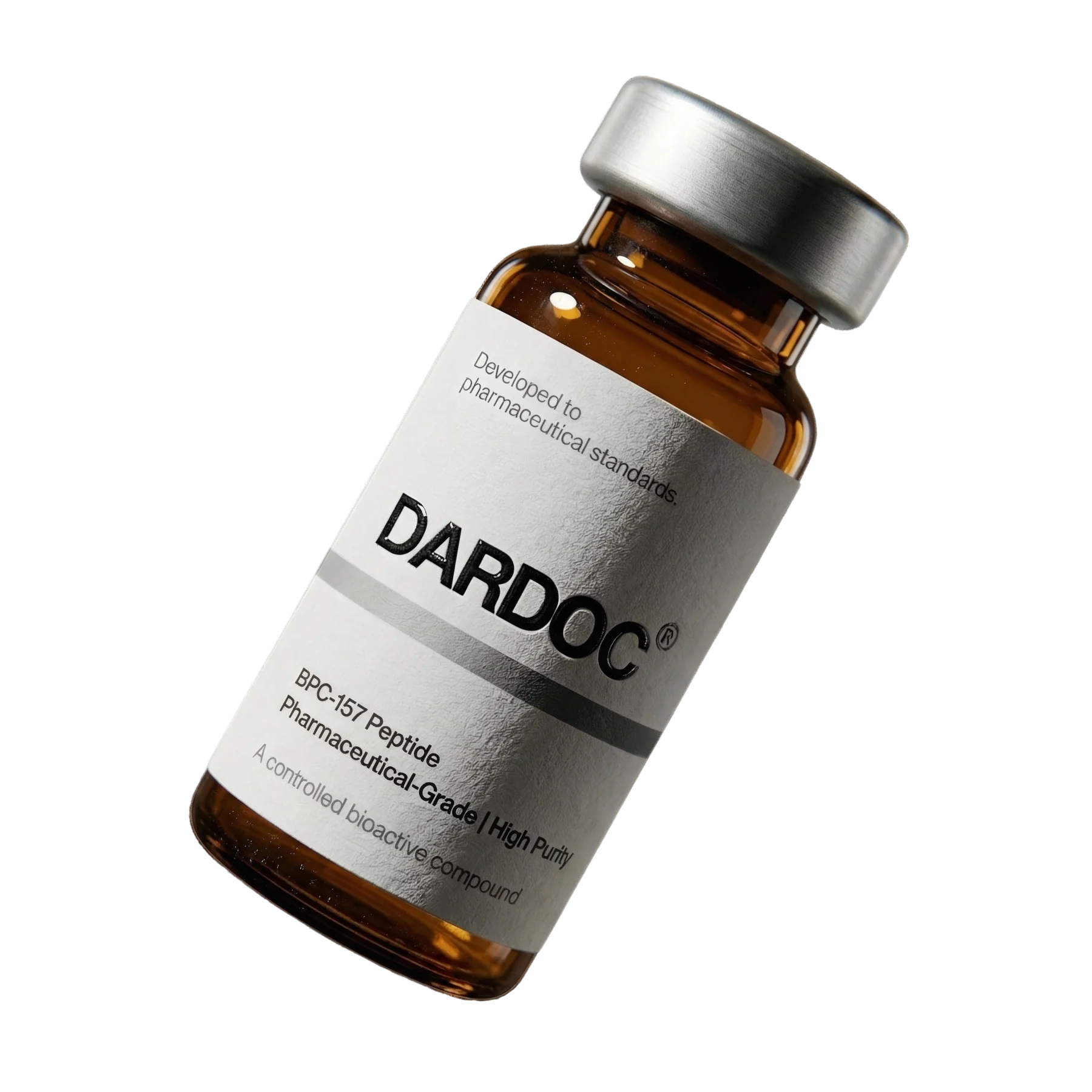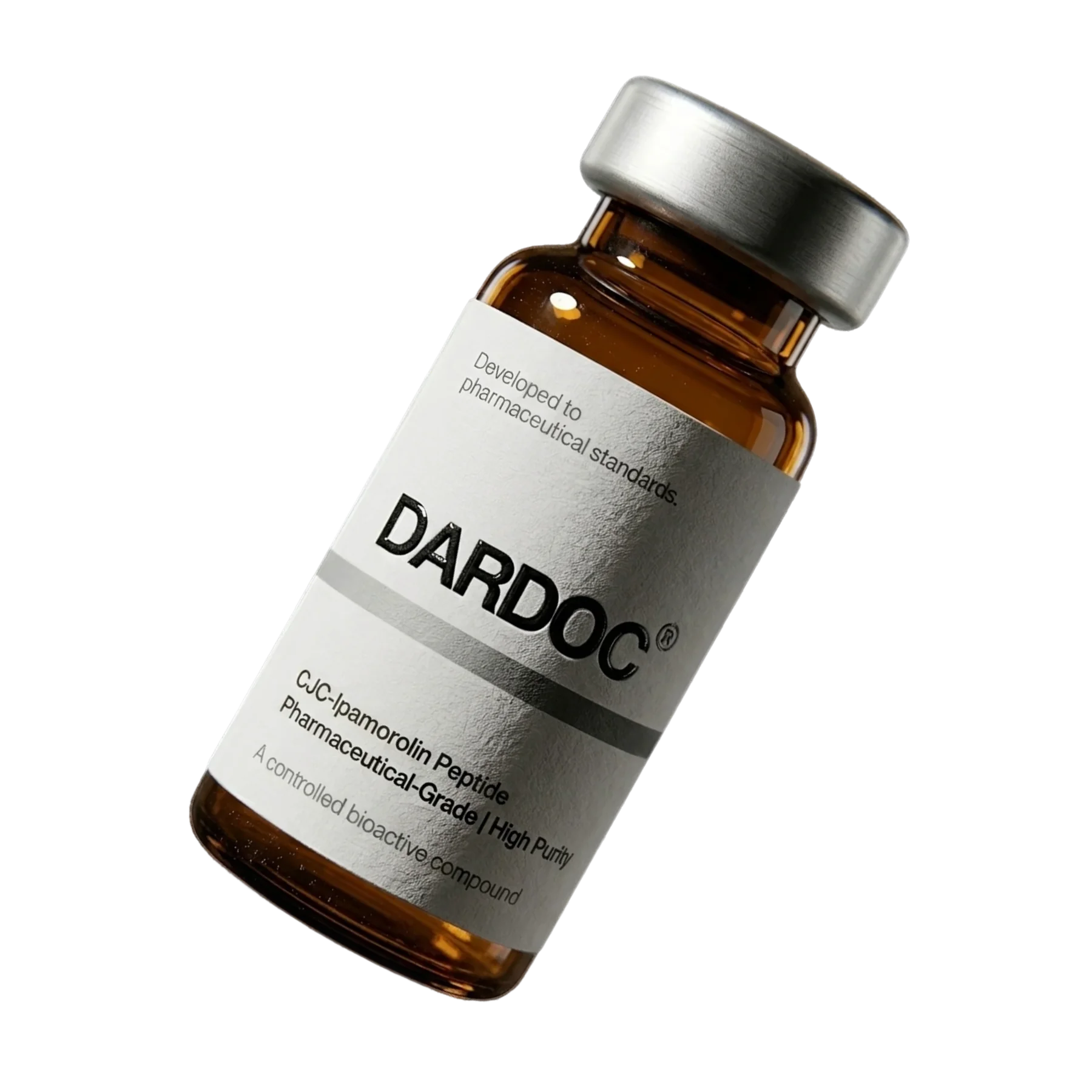
The pitch arrived in a Marina gym between sets. A regular at the squat rack, mid-thirties, lean, well-spoken, leans in and says he can sort out a sermorelin protocol for half what the clinics charge. He pulls out a phone, shows a vial in his palm, and says the supplier is reliable. The sales call is friendly, casual, and almost convincing. It also gets repeated, with small variations, in DIFC gyms during the lunchtime crowd, in Al Quoz performance studios, in the older bodybuilding rooms in Al Nahda, and on Yas Island and Al Reem in Abu Dhabi. The product changes. The pitch is the same.
The argument of this article is simple. Peptides bought from a gym are a coin flip. Peptides prescribed by a licensed physician are medicine. The two products look identical inside the vial. They are not the same thing. The UAE has the regulators (MOHAP, DHA, DoH), the licensed clinics, and the licensed compounding pharmacies to make peptide therapy a serious branch of preventive medicine. The black market exists in parallel, undercuts on price, and depends on the patient not asking the questions that would unmask it.
Here is what those questions are, why they matter, and what the clinical alternative looks like in practice.
The economics of the underground
Start with why the gym scene exists at all. A sermorelin or ipamorelin protocol from a DHA-licensed clinic in Dubai typically begins with a consultation in the AED 500 to AED 1,200 range, baseline labs in the AED 600 to AED 1,500 range depending on panel breadth, and a compounded prescription dispensed by a licensed pharmacy with cold-chain delivery. The all-in first-month cost is rarely under AED 2,500 to AED 3,500. A vial sold from a gym locker can land at half that, sometimes a third.
The price gap is not a margin difference. It is the absence of every cost that makes the legitimate product safe. No physician's time, no labs, no licensed compounding pharmacy, no batch testing, no sterility verification, no cold chain, no follow-up. The buyer is paying for a vial. The clinic patient is paying for a clinical pathway with a vial somewhere inside it. When two products that look identical have a 50 percent price gap, the gap is the diagnostic. Something has been removed from the cheaper version, and you are about to find out what.
The counterfeit problem in the regional supply chain
The World Health Organization estimates that approximately 1 in 10 medical products in low- and middle-income regions is substandard or falsified, and the Eastern Mediterranean is a region the WHO has flagged repeatedly in its Global Surveillance and Monitoring System data [WHO Global Surveillance and Monitoring System, 2017]. The Lancet has covered the global counterfeit medicines problem in detail, including the routes through which falsified injectables reach end users in regional markets [The Lancet, 2012].
Closer to home, MOHAP publishes annual pharmacovigilance and enforcement summaries that document customs interceptions of unlicensed pharmaceuticals at Dubai International and the country's land borders [MOHAP Pharmacovigilance Annual Report, 2023]. Unmarked vials labelled as growth hormone secretagogues, BPC-157, and tesamorelin show up in those interception reports often enough to be a category, not an anomaly. The DHA and DoH publish parallel notices when a specific compounded product is found to be circulating outside the licensed supply chain.
Peptides are a near-perfect counterfeit target. The end user cannot tell, by sight or by injection, what is in the vial. Active-ingredient verification requires mass spectrometry. Sterility testing requires a microbiology lab. Neither happens at a gym. A vial that costs the seller fifteen dirhams to fill with saline and reconstituted Chinese-sourced peptide of unknown purity sells for several hundred. The economics of the counterfeit business model are well documented [Frontiers in Pharmacology, 2018]. The business does not work without unverified buyers. That is the role the gym customer is being asked to play.
The sterility and dosing problem
Set aside the question of whether the peptide in the vial is the right molecule. Assume, generously, that it is. Two clinical risks remain that gym sourcing cannot address.
The first is sterility. Injectable peptides require sterile filling and sterile water for reconstitution. A vial filled in a non-licensed facility, stored without temperature controls in a Dubai summer (the active-ingredient half-life of many peptides drops sharply above 25 degrees Celsius), and reconstituted with bacteriostatic water of unknown provenance is a candidate for skin abscesses at the injection site, systemic bacterial infection, and, in the worst documented cases, sepsis from injecting visibly contaminated solution [FDA Guidance on Compounded Peptides, 2023]. The clinical literature on injection-site infections from non-pharmacy-grade injectables is consistent across decades [JAMA Internal Medicine, 2019].
The second is dosing. Peptides are dosed in micrograms, not milligrams, and the difference between a therapeutic dose and a problematic one is small. Insulin is the cleanest example: insulin is a peptide, and dosing errors with insulin kill people every year. The same precision applies to growth-hormone-axis peptides, where overdosing can drive IGF-1 into ranges associated with worse cardiometabolic outcomes [The Lancet Oncology, 2010]. A licensed prescription specifies the dose, the dilution, and the schedule. A vial off a gym floor specifies nothing. The buyer is calibrating from a Reddit thread.
The bloodwork blind spot
A licensed clinic in Dubai or Abu Dhabi will not write a peptide prescription without baseline labs. The standard panel before a growth-hormone-axis peptide protocol typically includes total and free testosterone, IGF-1, SHBG, full thyroid (TSH, free T3, free T4), CBC, comprehensive metabolic panel, lipid panel, and HbA1c. Some clinics add fasting insulin, hsCRP, and ferritin depending on the indication. The reason is not box-ticking. It is to identify contraindications the patient does not know they have.
Real examples from the literature and clinical practice: an undiagnosed pituitary adenoma producing baseline-elevated IGF-1, where adding a secretagogue would push the patient toward acromegalic territory. A subclinical thyroid disorder that would distort the symptoms used to monitor response. An HbA1c in the prediabetic range that needs to be addressed before any growth-hormone-axis intervention because growth hormone signalling antagonises insulin sensitivity [Endocrine Reviews, 2014]. A lipid profile that flags cardiac risk and changes which protocols are reasonable to consider. None of these show up on a self-assessment. All of them show up on a routine pre-prescription panel.
Buying from a gym means none of this happens. The patient takes a peptide that may interact poorly with a condition they have not been screened for. The gym seller is not asking for an HbA1c. The clinic is. That is the difference between a transaction and a treatment plan.
Book a peptide consultation in the UAE
The legal exposure in the UAE
The UAE's federal medicines law (Federal Law No. 8 of 2019 on Medical Products, the Profession of Pharmacy, and Pharmaceutical Establishments) regulates the import, distribution, possession, and dispensing of pharmaceutical products. Possession of unlicensed or unregistered pharmaceuticals can be a criminal matter, not a civil one [UAE Federal Law No. 8 of 2019]. MOHAP enforcement actions, summarised in the regulator's public reporting, include prosecutions for possession and sale of unregistered injectable products [MOHAP Pharmacovigilance Annual Report, 2023].
The everyday risk is not abstract. Customs officers at Dubai International and Abu Dhabi International routinely intercept vials in personal luggage, and the resulting administrative and legal process is not trivial. The risk extends to the buyer, not just the seller. A patient holding an unlabelled vial of compounded peptide with no prescription, no clinic name, and no pharmacy receipt is exposed under the federal medicines framework. A patient holding a documented prescription dispensed by a DHA- or DoH-licensed pharmacy with a labelled vial, batch number, and patient name is not. The paperwork is not bureaucracy. It is the legal substrate that distinguishes medicine from possession of an unlicensed pharmaceutical.
What a clinical pathway actually looks like
A properly run UAE peptide consultation has the same rough shape across responsible clinics. The variation is in the bedside manner, not the clinical sequence.
- Consultation with a DHA- or DoH-licensed physician. The doctor's licence number is verifiable on the regulator's public registry. Not a clinic manager, not a wellness coach, not the front desk.
- Indication and history review. The conversation establishes why a peptide is being considered, what alternatives have been tried, and what contraindications need to be ruled out. If a clinic is willing to start a protocol on the first visit without this, that is a flag.
- Baseline labs. The standard panel above, sometimes broader depending on the indication. Results returned and reviewed before any prescription is written.
- Prescription written for a specific peptide, dose, schedule, and duration. Not a generic protocol, not a vial handed over the counter.
- Dispensing by a licensed compounding pharmacy with documented quality controls. The clinic should be able to name the pharmacy and explain its licensure. Cold-chain delivery to the patient's home is the modern standard.
- Supervised first administration. The first injection of any new peptide protocol benefits from a registered nurse in the room. DarDoc's home-visit model handles this directly. Other clinic models route the patient back to the clinic for the same purpose.
- Follow-up labs at 8 to 12 weeks. Re-test the same biomarkers used at baseline. If the peptide is working, the labs reflect it. If it is not, the labs catch it before another quarter goes by.
Six to seven steps. None of them happen in a gym locker room. All of them happen at any clinic operating inside the UAE's regulatory framework.
What to ask, and the answers you will not get from a gym source
Useful questions for a clinic:
- Which licensed compounding pharmacy is producing the prescription, and can I see the pharmacy's MOHAP or DHA licence number?
- What's in the vial, what's the active-ingredient concentration, and what batch testing has been done?
- What does the cold chain look like from pharmacy to my home?
- Which baseline labs are you ordering before writing the prescription, and which are you re-checking at 8 to 12 weeks?
- Who's administering the first dose, and what's the contingency if I have a reaction?
- What are the contraindications, and have you ruled them out for me specifically?
- If this protocol doesn't work, what's the next clinical step?
The same questions, asked of a gym seller, do not have answers. There is no licensed pharmacy. There is no batch testing or sterility documentation. There is no cold chain beyond a fridge in a flat in JLT. There are no labs. There is no contingency, no contraindication review, no follow-up. The honest answer to every question is silence. That silence is the article in one sentence.
The bottom line
Peptide therapy is a serious branch of clinical medicine, and the UAE is one of the better-regulated markets in the region for accessing it properly. DHA and DoH licensing is rigorous, MOHAP enforcement is active, and the licensed compounding-pharmacy ecosystem is mature enough to deliver compounded peptides to patient homes with the documentation a regulator would expect to see.
The gym pathway is a separate product wearing the same label. It costs less because the clinical infrastructure that makes the legitimate product safe has been stripped out. The buyer takes on counterfeit risk, sterility risk, dosing risk, contraindication risk, and legal risk in exchange for a price discount. The risks are not theoretical, the regulators document them, and the international literature catalogues the harm patterns from injectables sourced outside the licensed supply chain [Frontiers in Pharmacology, 2018].
If peptide therapy is something you are considering, the right place to start is a consultation with a licensed physician, not a conversation in a locker room. This article is educational, not medical advice for your specific case. Your medical history, current medications, and goals matter. So does the clinic you choose to work with.