A 38-year-old expat walks into a Dubai clinic with a left Achilles that has not been right for fourteen months. He plays padel four times a week at a club in Al Quoz, the way half of his office now does. He has tried eccentric heel drops with a physiotherapist in JLT, two rounds of platelet-rich plasma at a sports-medicine clinic on Sheikh Zayed, six weeks of relative rest that he describes, accurately, as the worst six weeks of his year. A friend at his gym in Dubai Marina has started talking about a peptide called BPC-157. The friend's own elbow tendinopathy, he says, resolved in eight weeks. Is it real? Is it safe? Is it legal in the UAE?
The questions are reasonable. The answers are layered. BPC-157 is one of the most-discussed peptides in active-expat circles in the UAE, and it sits in one of the more honest grey zones in modern clinical medicine. There is real preclinical signal, real human use, and real reason for caution. This article is an evidence review, not a sales pitch. The goal is to give you the same temperature a thoughtful physician brings to the room when this conversation comes up.
What BPC-157 actually is
BPC-157 stands for Body Protection Compound-157. It is a 15-amino-acid sequence derived from a larger protein found in human gastric juice [Sikiric et al., Inflammopharmacology, 2018]. The peptide does not exist in the human body in this isolated form. It was identified, isolated, and characterized by a research group at the University of Zagreb led by Predrag Sikiric, who has been the central figure in the BPC-157 literature for more than two decades.
That last detail matters. The bulk of the BPC-157 evidence base comes from a single research lineage. That is not, on its own, a reason to dismiss the work. It is a reason to read it carefully and to weigh independent replication accordingly.
Structurally, BPC-157 is small enough to be synthesized at scale, stable enough at gastric pH to survive oral administration in some experimental conditions, and short enough that the immune system rarely treats it as foreign. Those properties are part of why the peptide became interesting in the first place.
The proposed mechanism, plainly
The most-replicated mechanistic finding for BPC-157 is its effect on angiogenesis, the formation of new blood vessels. Several lines of evidence point to upregulation of vascular endothelial growth factor receptor 2 (VEGFR2) signaling and modulation of the nitric oxide system [Huang et al., Vascular Pharmacology, 2015]. New blood vessels in injured tendon tissue mean better delivery of oxygen, nutrients, and resident repair cells, which is plausibly why the peptide shows up first in tendon-healing models.
The literature also describes upregulation of growth factors involved in tissue repair, modulation of nitric oxide synthase activity, and effects on the dopaminergic and serotonergic systems that are harder to interpret clinically [Sikiric et al., Inflammopharmacology, 2018]. The honest summary is that BPC-157 appears to be a pleiotropic signaling molecule. It does several things at once, and the relative importance of each effect to any given clinical outcome is not yet pinned down.
The evidence ladder
Here is where the article either earns your trust or loses it. The BPC-157 evidence base is a pyramid with a wide preclinical bottom and a narrow clinical top.
- Animal models. Several hundred peer-reviewed studies, the majority in rats, covering tendon, ligament, muscle, gut, vascular, and central nervous system injury models. Effect sizes in these studies are often striking. Independent replication outside the Sikiric group exists but is limited.
- Human case series and small open-label work. A growing but still modest body of clinical reports, mostly in musculoskeletal medicine and gastroenterology. Most are uncontrolled. Most are small. Most have not been replicated.
- Phase III randomized controlled trials. Zero. There is no large, blinded, placebo-controlled human trial of BPC-157 for any indication. This is the central limitation of the evidence base, and any honest discussion has to start there.
What this means in practice. A physician who tells you BPC-157 is FDA-approved for tendinopathy is wrong. A physician who tells you the evidence is no better than homeopathy is also wrong. The truth is in the middle, and the middle is uncomfortable for people who want clean answers.
The tendon-specific evidence
Tendon healing is the indication where BPC-157 has the most preclinical signal. In a transected Achilles tendon model in rats, the Sikiric group reported dose-dependent improvement in functional recovery, biomechanical strength, and histological healing markers compared with saline-treated controls [Sikiric et al., Inflammopharmacology, 2018]. Independent work has reported acceleration of tendon-to-bone healing in rotator cuff models in rats [Chang et al., Journal of Applied Physiology, 2011].
On a cellular level, BPC-157 has been shown to enhance the survival, migration, and proliferation of cultured tendon-derived fibroblasts under conditions that simulate injury. The same body of work has identified outgrowth of the FAK-paxillin pathway, a signaling cascade involved in cell migration, as one plausible mechanism [Chang et al., 2011].
The species gap is real and worth naming. Rat tendon biology is not human tendon biology. Healing rates, loading patterns, and the architecture of the tendon-bone interface differ. Effect sizes that are dramatic in a 300-gram rodent do not always translate to a 75-kilogram human pushing off a padel court at 30 kilometres per hour. Translation is the unanswered question.
What about the gut?
Given that BPC-157 was originally isolated from gastric juice, it is unsurprising that the second-most-developed evidence base is in gastrointestinal healing. Animal work has shown effects on gastric ulcer healing, intestinal anastomosis, and inflammatory bowel models [Drmic et al., World Journal of Gastroenterology, 2017]. The peptide's apparent stability across the gastric environment is part of why oral administration is sometimes argued for in this indication.
In active-lifestyle UAE patients, the gut indication shows up most often in two forms. NSAID-associated gastropathy in distance runners and CrossFit athletes who reach for ibuprofen too readily, and IBD-adjacent symptoms in patients who are looking for adjuncts to standard care. Neither use case has phase III evidence. Both are conversations a thoughtful gastroenterologist will hear out and weigh.
Why this matters in the UAE specifically
The active-expat patient archetype in the UAE is real and underserved by traditional physiotherapy alone. Three patterns show up in clinic week after week.
- Padel injuries. The number of padel courts in Dubai and Abu Dhabi has roughly tripled in the last three years, and the average padel player is a 30-to-50-year-old professional who plays four times a week with no warm-up culture and a loaded backhand. Medial epicondylitis, lateral epicondylitis, and chronic Achilles tendinopathy are the three injuries that walk through the door.
- CrossFit and functional-fitness shoulder and elbow tendinopathy. The Al Quoz boxes, the JLT boxes, the Yas Island affiliates. The volume on the snatch, the clean, and the kipping pull-up adds up. Supraspinatus and biceps-tendon irritation are common.
- Golf-related medial epicondylitis. Emirates Golf Club, Yas Links, Trump International, Dubai Hills. Golfer's elbow is the technical name for a reason.
- Distance running on hot pavement. The Dubai Marathon, the Hatta trail series, the early-morning runs along the JBR strip during the cooler months. Heat changes tendon biology, training load tolerance shifts, and overuse injuries to the Achilles, plantar fascia, and patellar tendon are well-documented [British Journal of Sports Medicine, 2019].
None of this is unique to the UAE in kind, but the density is. A Dubai sports-medicine clinic sees a cross-section of active expatriates that compresses what a London or New York clinic would see across a much larger geography. The questions about BPC-157 land in that clinic with a frequency that earns a careful answer.
Speak to a DarDoc physician
Routes of administration
Three routes appear in the literature, with very different evidence weight.
- Subcutaneous injection. The route used in the majority of preclinical work and in most human case series. Easy to dose, predictable absorption, and the basis for any clinical protocol that takes the existing evidence seriously.
- Oral. Defended by the Sikiric group on the basis of gastric stability data. Bioavailability is lower than subcutaneous and the human evidence is thinner. Some clinicians use oral as a maintenance route after an initial subcutaneous course, but this is pragmatic, not evidence-defined.
- Nasal and topical. Almost entirely research-only. Should not be part of a routine clinical protocol in 2026.
The side effect profile
Across the available preclinical and case-series literature, BPC-157 has a generally clean side-effect profile. Reported issues at therapeutic doses are mild and uncommon, and include local injection-site reactions, occasional dizziness, and transient changes in blood pressure [Sikiric et al., Inflammopharmacology, 2018]. There are no published reports of serious adverse events at typical clinical doses.
That said, the obvious caveat. There is no long-term human safety data. We do not know what daily subcutaneous BPC-157 looks like at five years, ten years, or in a population with comorbidities. The peptide's angiogenesis-promoting properties are particularly worth thinking about in patients with a personal or strong family history of malignancy. Anything that promotes new blood vessel formation is a theoretical concern in the context of a tumor's blood supply, and the responsible default is caution.
The DHA, DoH, and MOHAP regulatory reality
BPC-157 is not an FDA-approved drug. The FDA has issued guidance specifically classifying many compounded peptides, including BPC-157, as falling outside the bulk-substances list eligible for compounding by 503A pharmacies in the United States [FDA Guidance on Compounded Peptides, 2023]. That decision is jurisdiction-specific, and the regulatory picture in the UAE is its own thing.
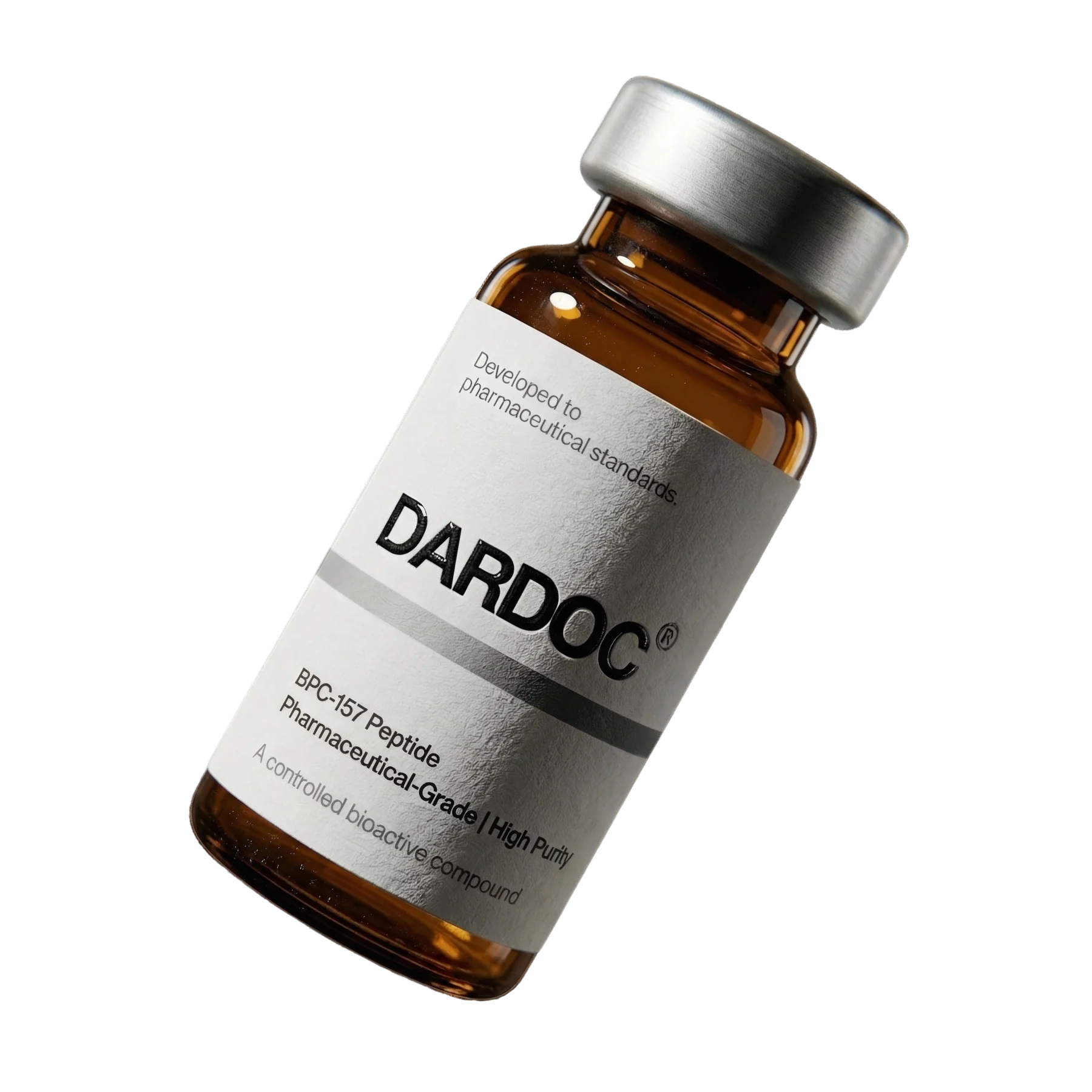
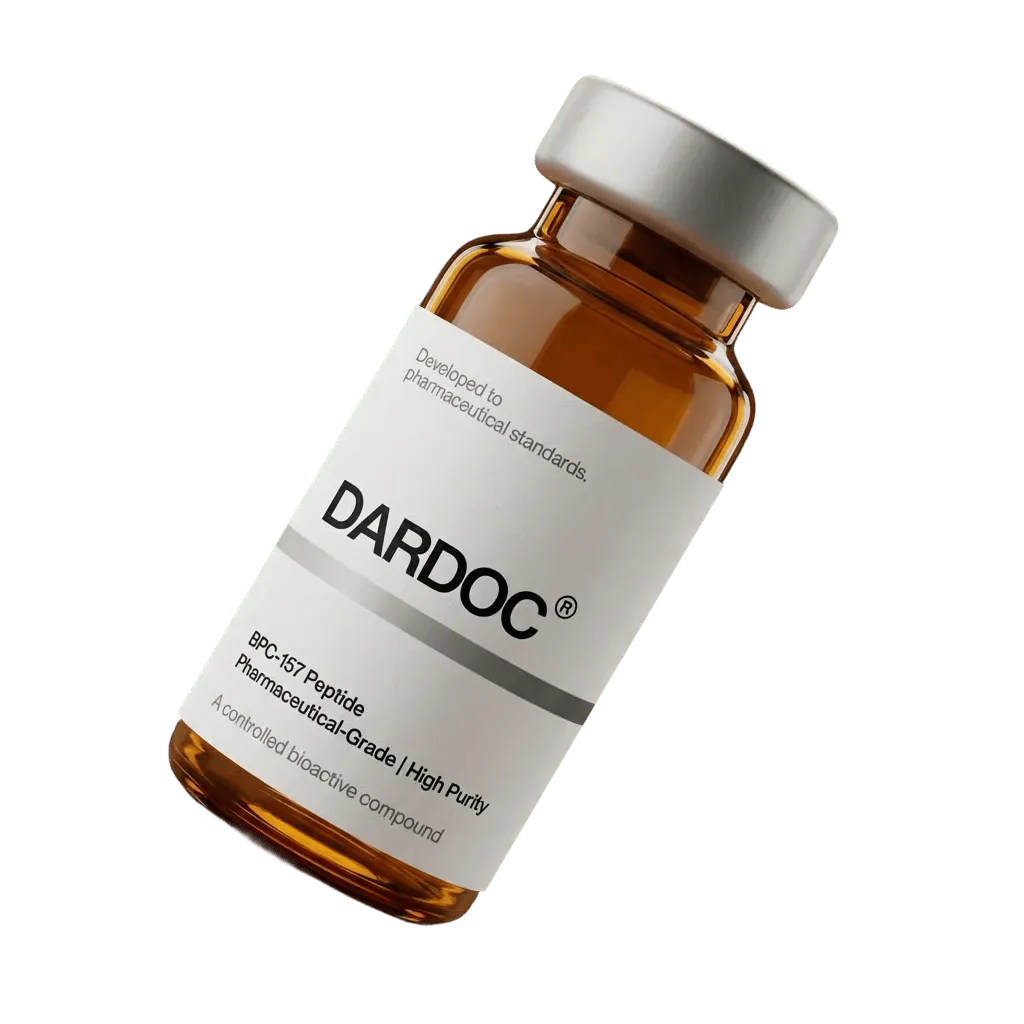
In practice, BPC-157 in the UAE sits in the compounded research-grade category. A licensed clinic with a relationship with a licensed compounding pharmacy can, in principle, prescribe and dispense it for off-label use after a documented consultation. The supply-chain integrity is the rate-limiter. The clinic should be able to tell you which compounding pharmacy is producing the vial, what the source of the active pharmaceutical ingredient is, and what quality controls (sterility testing, mass spectrometry verification of the peptide sequence) sit behind it.
What you should never accept. A vial handed to you from a gym contact in Al Barsha. An unlabelled product purchased through Instagram. A clinic that cannot tell you who produced what is in the syringe. The World Health Organization has flagged the Eastern Mediterranean as a hotspot for substandard and falsified medical products [WHO, 2017], and peptides are particularly easy to mislabel because end-users cannot verify content without lab analysis.
Who BPC-157 is, and isn't, for
A reasonable case for considering BPC-157 looks like this. A patient with documented tendinopathy, ideally confirmed on ultrasound or MRI, who has plateaued on a properly executed course of conservative care. Eccentric loading, structured physiotherapy, activity modification, and where appropriate platelet-rich plasma. The patient has no malignancy history, no active inflammatory condition that would change the calculus, and is not pregnant or breastfeeding. The conversation includes informed consent that the evidence is preclinical-heavy and that the protocol is off-label.
An unreasonable case looks like this. Prophylactic use in a healthy athlete who wants to recover better. Use in any patient with an active or recent malignancy. Use in pregnancy or breastfeeding. Use in a child or adolescent. Use as a substitute for a proper diagnostic workup, including imaging, when imaging is indicated. Use in place of physiotherapy rather than alongside it.
The single most common mistake in this space is reaching for BPC-157 first, before the basics have been done. Most tendon problems improve with the basics. The peptide question belongs at the end of the conversation, not the beginning.
The bottom line
BPC-157 is a peptide with real preclinical signal in tendon healing, plausible mechanistic underpinnings, and a small but growing clinical case-series literature. It is not FDA-approved, it has not been tested in a phase III randomized trial, and it carries the regulatory and supply-chain caveats that come with any compounded research-grade peptide in the UAE. It is reasonable to consider for the right patient, after the basics, with a licensed physician, a licensed compounding pharmacy, and informed consent. It is not reasonable as a shortcut, a prophylactic, or a gym-bought vial.
If you are thinking about BPC-157 for a specific tendon problem, the first conversation is not about the peptide. It is about your diagnosis, what you have already tried, and whether the basics have been properly done. The second conversation is about whether the peptide is a sensible adjunct in your specific situation. Those conversations belong with a DHA-, DoH-, or MOHAP-licensed clinician who knows the literature, the regulatory frame, and your medical history. This article is educational. It is not medical advice for your specific situation.