A 45-year-old executive walked into a longevity clinic in DIFC last winter with a screenshot of an Instagram post. The post was a stylised graphic showing four vials, a price, and the phrase 'cellular age reversal'. He wanted to know if the stack on offer (an NAD+ IV, an NMN supplement, weekly sermorelin injections, and a CJC-1295 / ipamorelin combination) would, as the post claimed, 'turn his biology back ten years'. He had the disposable income. He had the discipline. What he didn't have was a clear sense of which parts of that stack were supported by clinical evidence, which were preliminary, and which were marketing residue from a decade of biohacking forums.
The longevity-branded clinic boom across Dubai (DIFC, Jumeirah, Palm Jumeirah, Marina) has been one of the most distinctive shifts in UAE healthcare since 2023. Some of these clinics are excellent. Some are price lists with stethoscopes. The job of this article is to give an honest, evidence-led account of the molecules at the centre of that boom (NAD+, its precursors, and the growth-hormone-axis peptides) so a reader can walk into a consultation knowing what to ask for and what to walk away from.
The biology, briefly
Biological aging is not a single process. It's a portfolio of declines: mitochondrial efficiency drops, the protein quality-control machinery slows, telomeres shorten, senescent cells accumulate, and the signalling networks that coordinate cellular maintenance lose fidelity [Lopez-Otin et al., Cell, 2013]. The hallmarks-of-aging framework, now in its second formal revision, organises this into roughly twelve interacting axes.
Two of those axes have become the commercial centre of longevity medicine. The first is NAD+ and the sirtuin / mitophagy machinery it powers. The second is the somatotropic axis: growth hormone, IGF-1, and the pituitary signalling that declines with age. Almost every 'longevity stack' you'll see marketed in a Jumeirah clinic is some combination of interventions targeting these two axes.
Why these two? Because both have a clear biochemical story, both have decades of mechanistic research behind them, and both have intermediate biomarkers (NAD+ levels in tissue, IGF-1 in serum) that can be measured. That makes them legible to clinicians and marketable to patients. It does not, on its own, mean the interventions extend healthy lifespan in humans.
NAD+ and why it matters
Nicotinamide adenine dinucleotide (NAD+) is a coenzyme present in every living cell. It's the molecular currency that mitochondria use to convert food into usable energy, and it's the cofactor that sirtuins (a family of enzymes implicated in DNA repair, metabolic regulation, and lifespan extension in model organisms) need to function.
NAD+ levels fall with age. The most widely cited human tissue analysis found that NAD+ concentrations in skin dropped roughly 50 percent between age 20 and age 60, with parallel declines documented in liver, brain, and muscle [Massudi et al., PLOS ONE, 2012]. The decline is real, it's reproducible, and it tracks with the functional decline you'd expect: less efficient mitochondria, slower DNA repair, less robust circadian signalling.
The mechanistic case for restoring NAD+ is strong. The clinical case for any specific intervention restoring it in humans, in a way that improves outcomes you actually care about, is more complicated.
IV NAD+ versus oral precursors
Walk into most Dubai longevity clinics and you'll be offered NAD+ as an intravenous drip. The drip is dramatic, the marketing is photogenic, and the price tag is substantial. The pharmacology is more uncertain than the marketing suggests.
The NAD+ molecule is large and polar. Cellular uptake is limited; cells largely don't import intact NAD+ across the plasma membrane. What appears to happen with IV NAD+ is that the molecule is broken down extracellularly into precursors (nicotinamide, nicotinamide riboside) which are then taken up by cells and reassembled into NAD+ inside [Trammell et al., Nature Communications, 2016]. The IV-NAD+ approach may work, but it likely works through the same pathway as oral precursor supplementation, with a less convenient delivery route.
The precursor pathway is where the more interesting human evidence sits. Two molecules in particular have been studied: nicotinamide riboside (NR) and nicotinamide mononucleotide (NMN). Both raise NAD+ in human blood and tissue at standard doses. The Imai and Sinclair labs have published extensively on NMN biology since the mid-2010s [Mills et al., Cell Metabolism, 2016], and the first well-controlled human NMN trial showed modest improvements in muscle insulin sensitivity in prediabetic women [Yoshino et al., Cell Metabolism, 2018]. NR has a broader regulatory footprint, with a defined GRAS designation in the US and several human safety studies.
The honest position is this: oral NMN and NR reliably raise NAD+ levels in humans. Whether that translates into the things patients actually want (more energy, better sleep, slower visible aging, longer healthspan) is supported by anecdote and animal data more than by large randomized trials in humans. The mechanistic case is real. The clinical case is preliminary.
The honest acknowledgment
Most of the longevity literature on NAD+ and its precursors is in mice, worms, or yeast. Human extension-of-lifespan data does not yet exist, for the unavoidable reason that the trials would take longer than a career. The Sinclair lab's mouse work has shown NMN supplementation improves several aging biomarkers and modestly extends lifespan in some genetic backgrounds [Sinclair lab, multiple Cell publications, 2013-2020]. Whether any of that translates to humans is an open question. People who tell you otherwise are either over-reading the data or selling something.
That doesn't make the interventions worthless. It makes them experimental. A patient with realistic expectations, baseline labs, and a willingness to re-test can take an NAD+ precursor for a year and find out whether anything measurable improves. A patient who's been told 'this will reverse your biological age' has been mis-sold.
The growth-hormone-axis peptides
The second pillar of the longevity stack targets the somatotropic axis. Growth hormone secretion from the pituitary peaks in adolescence and declines progressively from the third decade onward. By age 60, most adults secrete a small fraction of the growth hormone they did at 20, with parallel reductions in IGF-1, the downstream hormone that mediates most of growth hormone's effects [Rudman et al., NEJM, 1990]. That decline correlates with the things patients notice in midlife: poorer sleep, slower recovery, body-composition shifts, reduced lean-mass maintenance despite training.
The peptide approach to this is not to inject growth hormone directly (which is heavily regulated, expensive, and supraphysiological). It's to use a 'secretagogue' peptide that prompts your own pituitary to release more growth hormone in its natural pulsatile pattern. The four most-discussed are:
- Sermorelin. A 29-amino-acid analog of growth-hormone-releasing hormone (GHRH). FDA-approved historically for pediatric growth hormone deficiency, withdrawn from the US market in 2008 for commercial reasons, now used in compounded form by longevity clinicians.
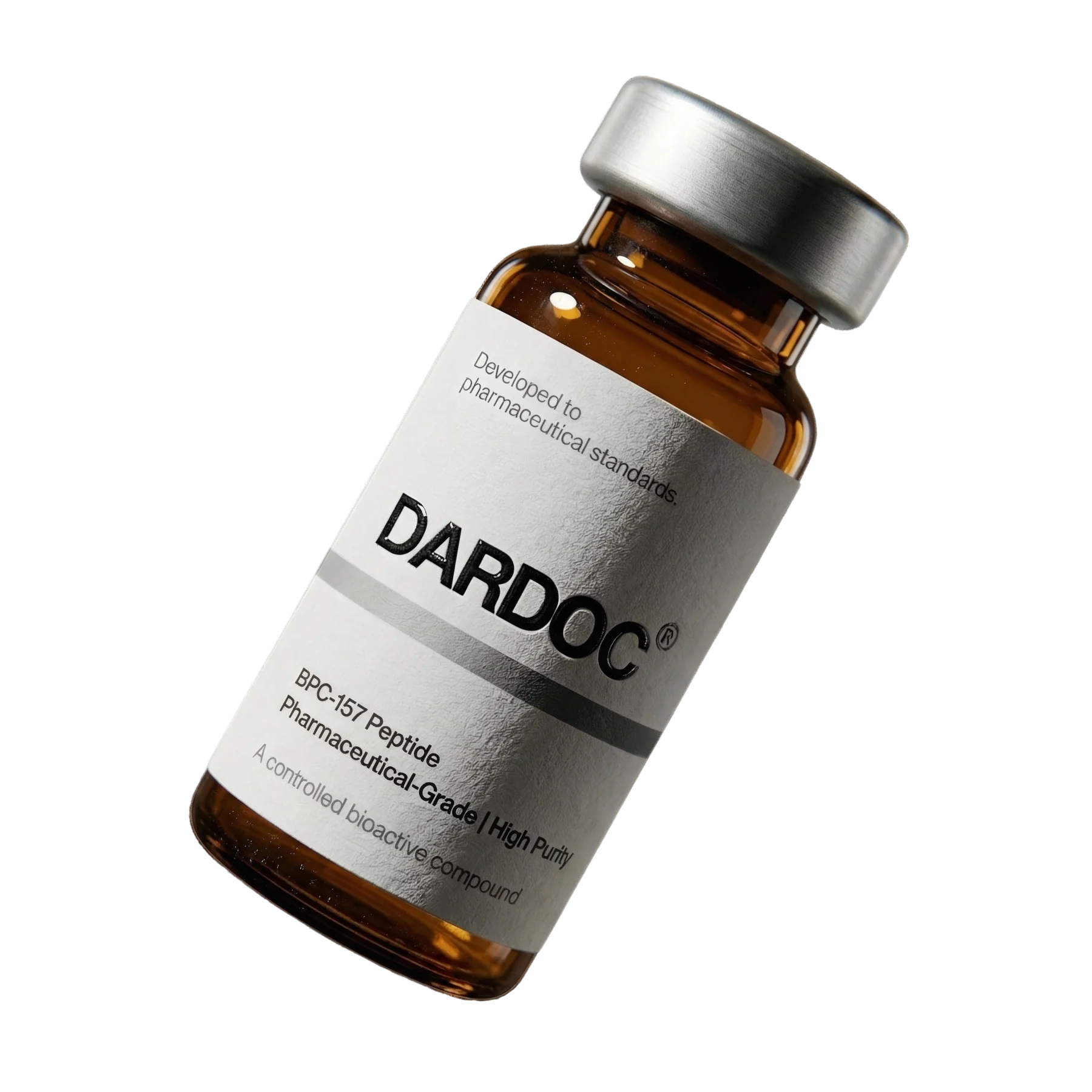
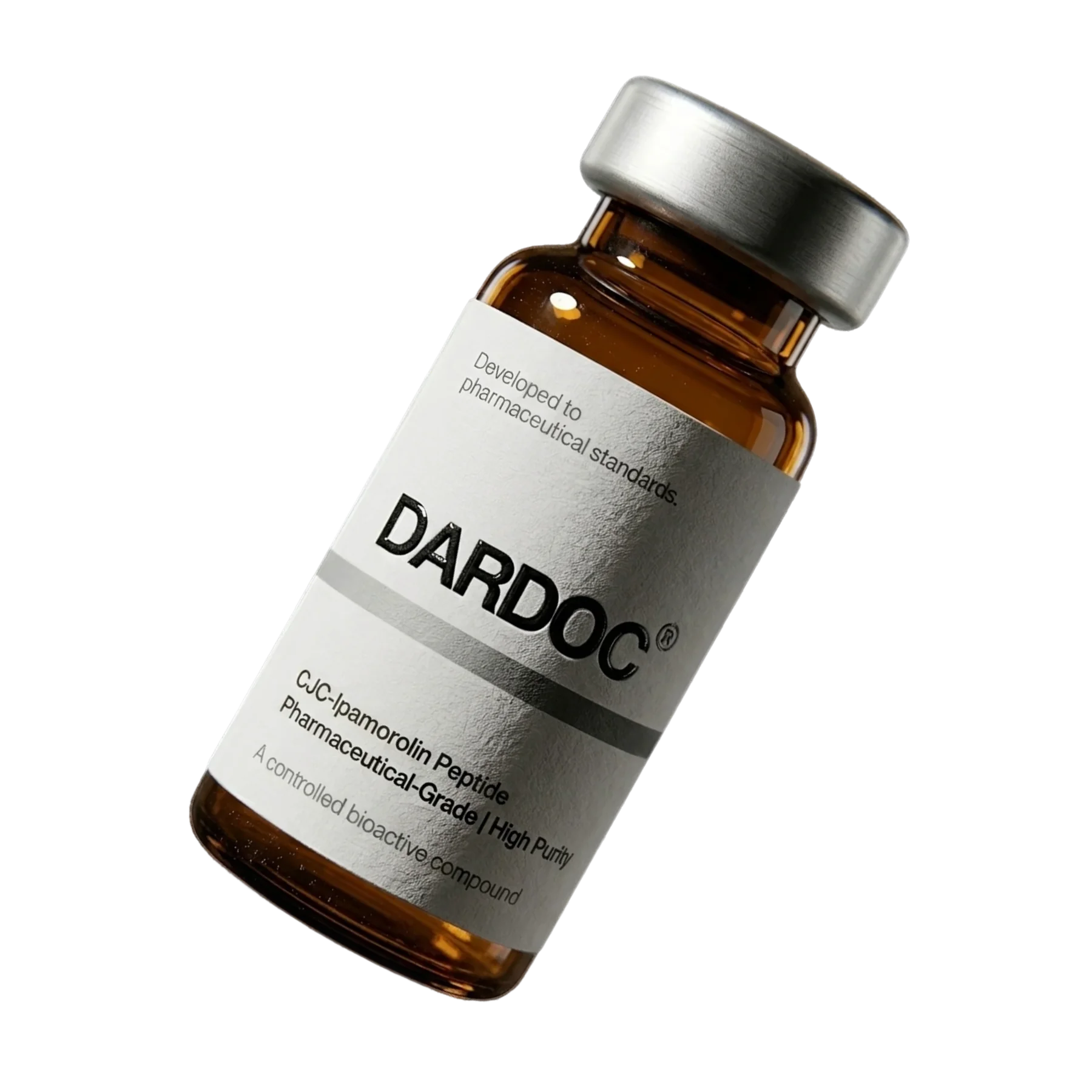
- CJC-1295. A modified GHRH analog with a longer half-life, designed to provide a sustained nudge to the pituitary. Almost always paired with ipamorelin in clinical practice.
- Ipamorelin. A pentapeptide that acts on the ghrelin receptor to stimulate growth hormone release without the appetite or cortisol effects that older ghrelin agonists produced. Generally well-tolerated in clinical use.
- Tesamorelin. A stabilized GHRH analog. Notably, it's the one with FDA approval (granted 2010) for HIV-associated visceral lipodystrophy, with phase III evidence showing significant visceral fat reduction [Falutz et al., NEJM, 2010]. Off-label use for general visceral fat in metabolically healthy patients is more controversial.
The mechanism of all four is similar: stimulate the pituitary, raise IGF-1, see the downstream effects of a younger somatotropic axis. Reported clinical outcomes include modest improvements in body composition, sleep architecture (particularly slow-wave sleep), and recovery from training. These are real but typically take 12 to 24 weeks to become measurable.
The IGF-1 conversation
The most important balance to strike when discussing growth-hormone-axis peptides is this: IGF-1 is a growth signal. Growth signals do useful things (muscle protein synthesis, tissue repair, recovery) and they do less useful things (they promote the proliferation of any cell that has the relevant receptor). Persistently elevated IGF-1 has been associated, in epidemiological studies, with increased risk of certain cancers, particularly prostate, breast, and colorectal [Pollak, Lancet Oncology, 2008].
The clinical question is not 'is IGF-1 dangerous'. IGF-1 in physiological range is necessary for health, and centenarians as a group have IGF-1 levels in the lower half of the normal range, not at the extremes. The question is 'what range are we targeting, and how are we monitoring it'. Pushing a patient's IGF-1 to the upper quartile of the youthful range to chase the body-composition effect is a different proposition from restoring IGF-1 from a low quartile to the middle.
A clinic that prescribes a GH-axis peptide without checking baseline IGF-1, without re-checking it at 12 weeks, and without screening for cancer risk factors is not running a longevity practice. It's running a price list.
Speak to a DarDoc physician
The stacking question
The way these molecules are commonly used in longevity practice is as a stack: an NAD+ precursor (usually NMN or NR), a GH-axis peptide (most often a CJC-1295 / ipamorelin combination), and aggressive lifestyle optimization (sleep, resistance training, time-restricted eating, vitamin D and omega-3 supplementation). The rationale for stacking is that aging is multi-axial, so a multi-axial intervention should outperform a single-axis one.
The flaw in evaluating the stack is that no large randomized trial has tested it as a stack. The components have been studied individually with varying rigour, but the combination has not. What's available is a body of clinical experience from physicians running longevity practices, intermediate-biomarker improvements (IGF-1 normalization, NAD+ tissue increases, body-composition shifts), and a great deal of patient-reported benefit. That isn't nothing. It also isn't a phase III trial.
An honest clinician will tell you the stack is plausibly synergistic, that the mechanistic logic is reasonable, and that the patient-level outcome you'll see at 6 months is the right way to evaluate whether it's working for you specifically. A clinician who tells you the stack is 'proven' to extend lifespan is overstating the evidence.
Who's a candidate
The patients who derive the most defensible benefit from a longevity-axis intervention share several features:
- Documented IGF-1 in the lower half of the age-adjusted reference range, particularly when paired with symptoms (declining sleep quality, slow recovery, body-composition shifts despite consistent training).
- Sleep architecture decline measured by wearable or formal study. Slow-wave sleep tends to be the first axis to respond to GH-axis peptides.
- Body-composition concerns (rising visceral fat, declining lean mass) that haven't responded to a competent training and nutrition baseline.
- A clean personal and family cancer history. This is the screening line that should never be skipped.
- A willingness to do baseline and follow-up bloodwork. The intervention is only useful if it's monitored.
The patients who are not good candidates: anyone with an active malignancy or recent cancer history, anyone with uncontrolled cardiac disease, anyone with documented growth hormone excess (acromegaly), pregnant or breastfeeding women, and anyone who wants the protocol without the bloodwork. The last category is the most common reason a clinic should decline to prescribe and the most common reason a sub-standard clinic doesn't.
The UAE clinic landscape
The Dubai longevity boom has produced two distinct kinds of clinics. The first kind looks like a clinic: it has DHA-licensed physicians visible on the MOHAP registry, it draws baseline labs before any prescription, it explains which compounding pharmacy produces the vials, and it re-tests at 8 to 12 weeks. The second kind looks like a wellness retail experience: it has price lists for stacks, the consultation is brief, the bloodwork is optional or absent, and the staff who answer your questions about side effects are not always the same people who write the prescription.
The expat demographic this market serves is well-defined: 35 to 55, frequent international travel (with the jet lag and cortisol consequences that follow), high-stress professional roles, indoor lifestyles in 45-degree summers, and a real and well-documented vitamin D deficiency despite the regional sunshine, because most working hours happen between air-conditioned interiors. Many of these patients have been to Riyadh, Singapore, Zurich, or California for biohacking work and arrive in Dubai with a sophisticated but uneven understanding of what they're after. They deserve a clinical conversation, not a sales conversation.
A useful diagnostic when evaluating a clinic: ask which compounding pharmacy produces the prescription, what the baseline lab panel includes, what re-testing is scheduled, and what the contraindications are. A clinic running a real practice answers all four in plain language. A clinic running a price list will struggle with at least one of them.
The regulatory reality
The DHA, the Department of Health Abu Dhabi, and MOHAP between them set the framework for which longevity-axis peptides can be prescribed and how. The picture by molecule:
- Sermorelin. Originally FDA-approved in 1997 for pediatric growth hormone deficiency, withdrawn from the US market in 2008 for commercial reasons rather than safety. Now used in compounded form by longevity-trained physicians. UAE access is via licensed compounding pharmacies, with prescription required.
- Ipamorelin and CJC-1295. Both used in compounded form. Not separately registered as branded pharmaceuticals. UAE prescription pathway is the same as sermorelin: licensed clinic, licensed compounding pharmacy, documented quality control [FDA Guidance on Compounded Peptides, 2023].
- Tesamorelin. FDA-approved in 2010 for HIV-associated visceral lipodystrophy. The branded form (Egrifta) is the most regulated of the four and the only one with phase III evidence behind its primary indication.
- NMN and NR. Sold as supplements rather than prescription medicines in most jurisdictions. UAE supplement supply chain is uneven, and a clinic-grade product with documented purity is the right minimum standard. NR has the firmer regulatory footprint of the two.
The recurring theme: licensed clinic, licensed compounding pharmacy, documented quality control. Anything sourced outside that chain (gym networks, Instagram DMs, unlicensed online vendors) sits in the same risk category as any other unregulated injectable product, which is to say it should not be in a patient's hands.
The bottom line
NAD+ biology is real, the precursors do raise NAD+ levels in humans, the GH-axis peptides do produce measurable changes in body composition and sleep, and there is a defensible role for these interventions in a carefully selected, well-monitored patient. The marketing has outrun the evidence in places. The molecules themselves are not snake oil. The longevity-clinic boom in Dubai is producing both excellent clinical practice and aggressive retailing under the same banner, and the work for a patient is to tell which one they're walking into.
If you're considering a longevity protocol, talk to a licensed physician before you commit to any stack. Ask for the bloodwork, ask which compounding pharmacy is involved, and ask what re-testing looks like. This article is educational, not medical advice for your specific situation. Your medical history, your family history, your medications, and your goals all matter, and a clinic that takes all four seriously is the kind of clinic worth working with.